
 Espresso Gears
 Brewing Essentials
 Coffee Accessories
 Brewing Guides
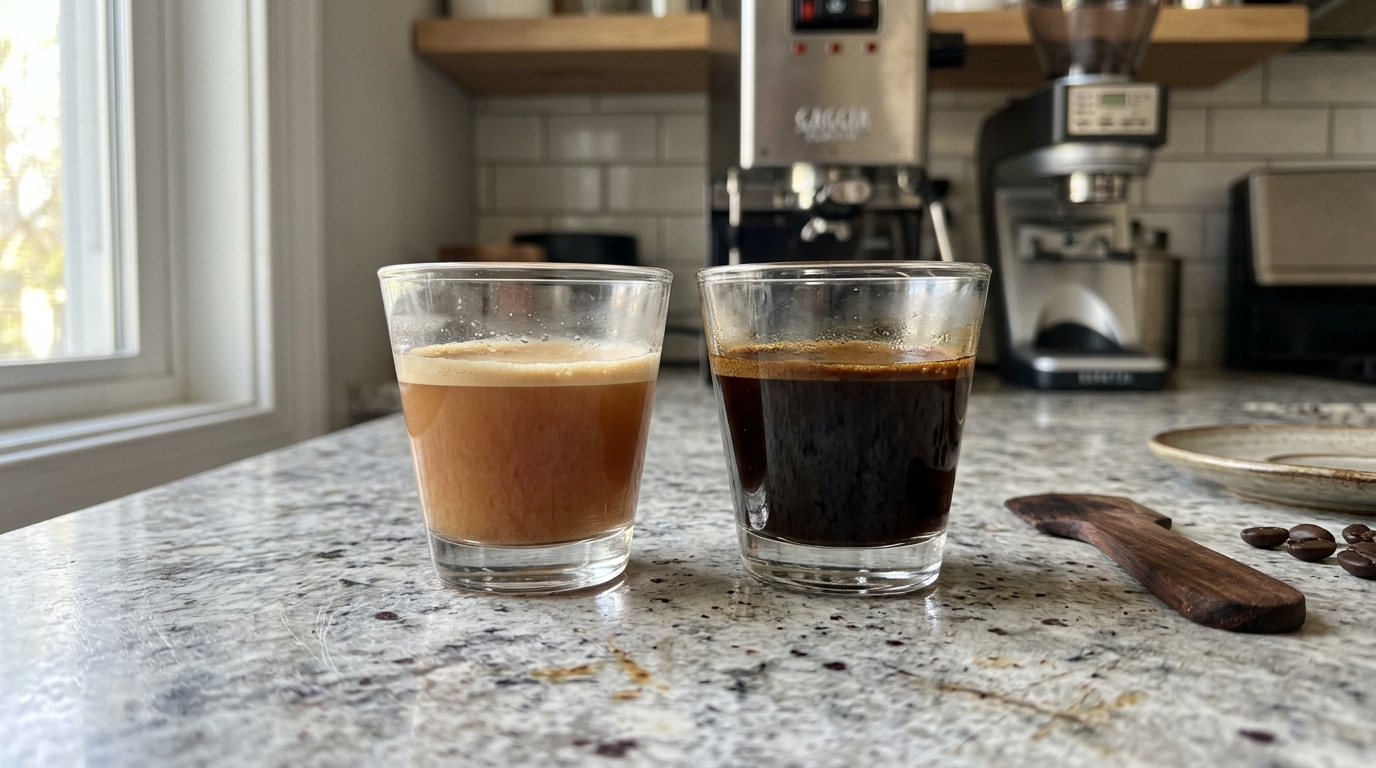
A sour shot means the water pulled too little out of the grounds, usually because the grind is too coarse or the shot ran too fast. A bitter shot means it pulled too much, usually a grind too fine or a shot that ran too slow. Grind size fixes both.
Sour and bitter are opposite problems with the same root cause: how much flavor the water actually pulled out of the coffee in the time it had. Once you can tell the two apart, fixing either one usually comes down to a single adjustment on the grinder, not a new bag of beans.
Sour Shots: What Is Happening and How to Fix It
A sour, sharp, almost vinegary shot is a sign of under-extraction. The water moved through the grounds too quickly to dissolve enough flavor, usually because the grind is too coarse for espresso, the dose is too low, or the water temperature is too cool. The fix is to grind finer, which slows the water down and gives it more time and surface area to extract. If the shot is also running noticeably faster than 25 seconds, that is a strong confirming signal.
Bitter Shots: What Is Happening and How to Fix It
A harsh, ashy, or burnt-tasting shot is a sign of over-extraction. The water spent too long pulling flavor out of the grounds, usually because the grind is too fine, the dose is too high, the water is too hot, or the beans themselves are stale and roasted dark enough to be bitter on their own. The fix is to grind coarser, which speeds the water through and limits how much it can over-extract. Stale beans compound this, since old coffee tends to taste flat and bitter no matter how well the shot is dialed in.
Sour means the water didn’t have enough time. Bitter means it had too much. Grind size is the dial that controls that time.
The 25 to 30 Second Shortcut
Most espresso recipes target a shot time of roughly 25 to 30 seconds from the moment water starts flowing to the moment you stop the shot. It is not a hard rule, different beans and recipes shift it, but it is a fast diagnostic. A shot finishing well under 25 seconds is leaning sour and under-extracted. A shot crawling past 35 seconds is leaning bitter and over-extracted. Either way, adjust the grind before you touch anything else.
Stop Blaming the Beans or the Machine First
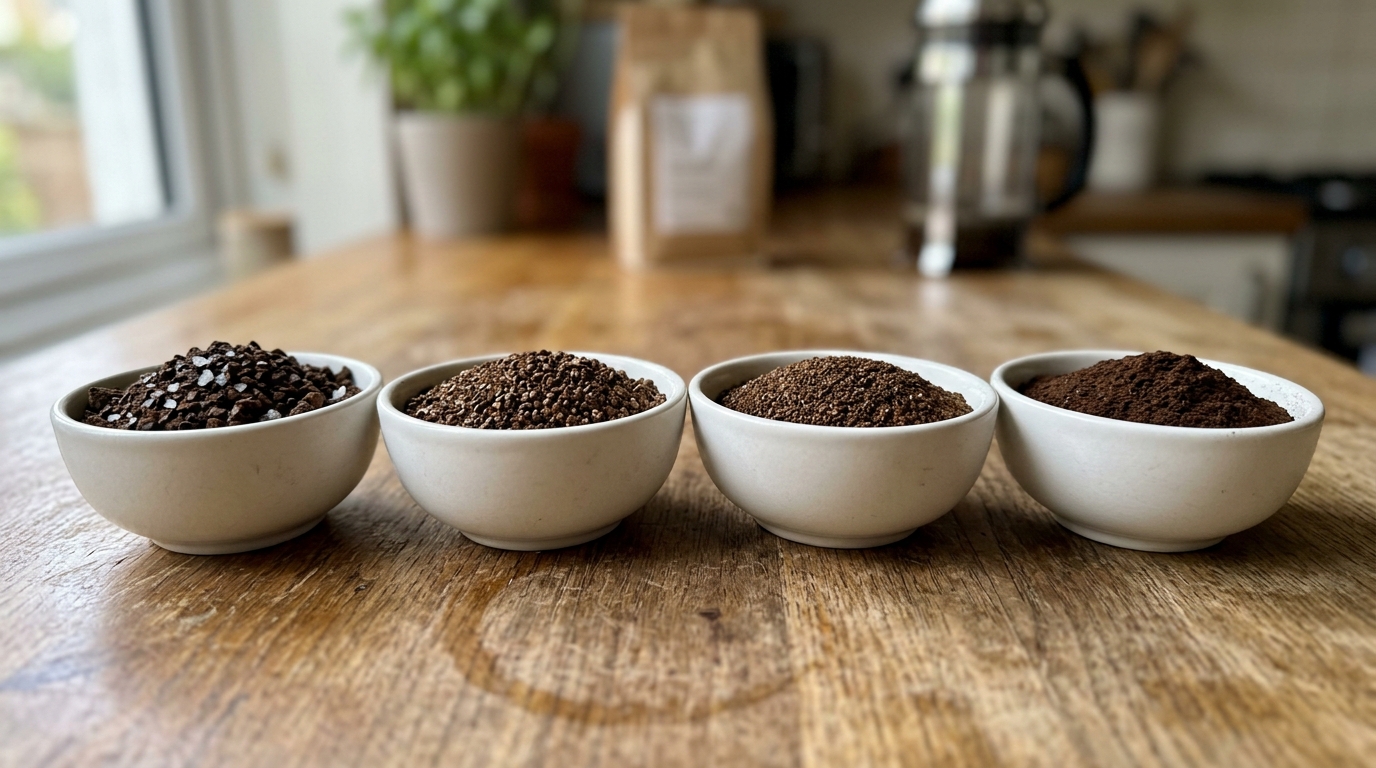
When a shot tastes off, the instinct is to switch beans or assume the machine is broken. Most of the time, neither is true. The same bag of beans can produce a sour shot, a balanced shot, or a bitter shot depending only on how fine the grind is set, which is why professional baristas dial in grind size every single day, sometimes multiple times a day, as humidity and bean age shift slightly. Before buying new beans or a new machine, grind a test shot finer or coarser and taste again. It solves the problem far more often than either of those more expensive fixes.
Dial In With the Right Grinder
A burr grinder with fine, repeatable adjustments is what actually lets you fix sour and bitter shots on the spot.
One thought on “Why Does My Espresso Taste Sour or Bitter?”