
 Espresso Gears
 Brewing Essentials
 Coffee Accessories
 Coffee Culture
This glossary covers the coffee and barista terms you will actually hear at a cafe or see on a bag of beans, in plain language, grouped by brewing, beans, espresso drinks, and tasting so you can look up exactly what you need.
Coffee has its own vocabulary, and most of it got attached to real, specific things long before anyone wrote it down for beginners. That is how you end up with a menu board that lists a cortado and a macchiato next to each other with no explanation of what separates them. This glossary is organized by category so you can jump to the section you actually need, whether that is sorting out brewing equipment, decoding a bag of beans, ordering with confidence, or talking about what is in your cup.
Brewing & Equipment Terms
Pour-Over
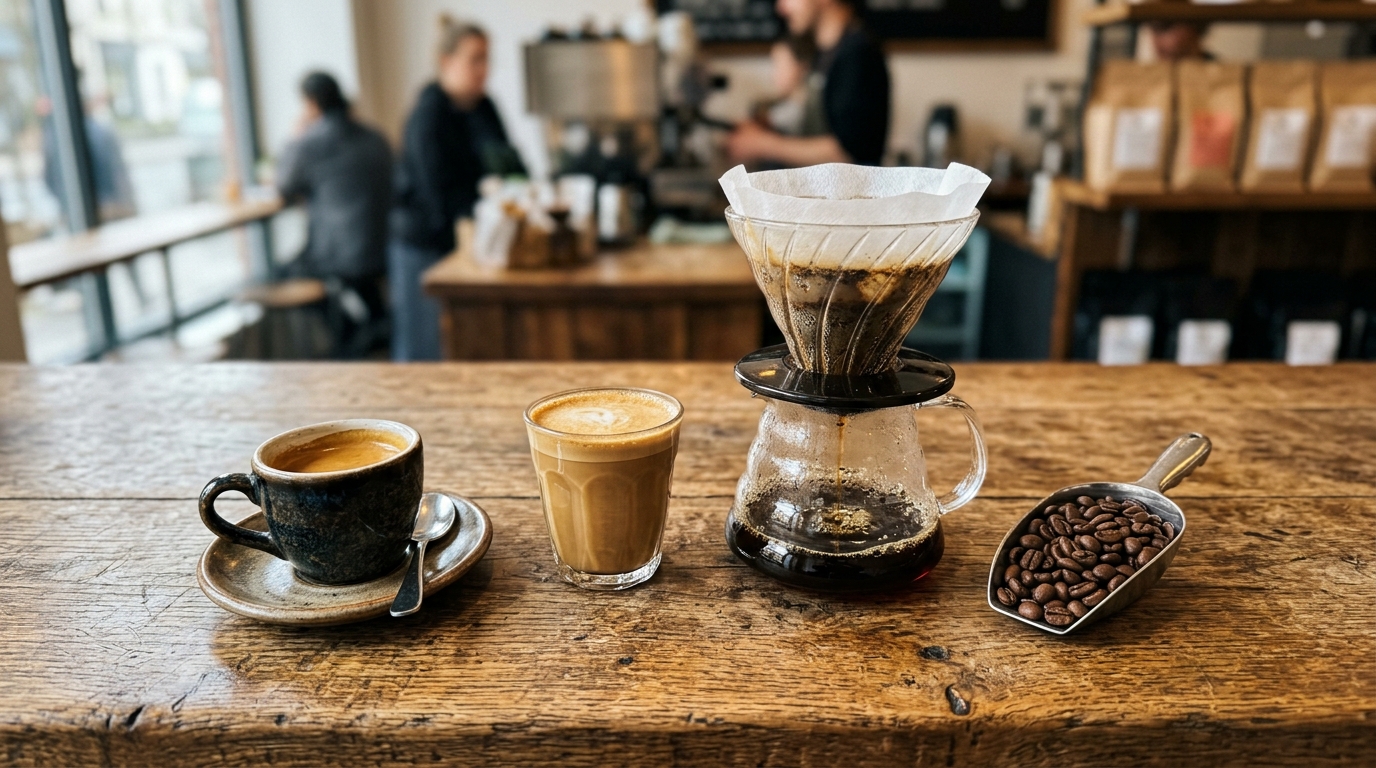
A manual brewing method where hot water is poured over grounds sitting in a filter cone, usually in slow, controlled circles, letting gravity pull the brewed coffee through into a cup or carafe below.
French Press
An immersion brewer that steeps grounds directly in hot water, then uses a mesh plunger to separate the grounds from the finished coffee. Produces a heavier-bodied cup than filtered methods since no paper catches the fine particles and oils.
Burr Grinder
A grinder that crushes beans between two abrasive surfaces to produce a consistent, adjustable grind size. A blade grinder chops beans unevenly instead, which is why burr grinders are the standard recommendation for anyone serious about brewing.
Bloom
The first 30 to 45 seconds of pour-over brewing, when a small amount of water saturates the grounds and they visibly puff up as trapped carbon dioxide escapes. Skipping the bloom is one of the most common reasons a pour-over tastes flat.
AeroPress
A manual brewer that uses hand pressure to push air through a chamber of water and grounds, forcing the coffee through a paper filter at the bottom. Falls somewhere between a French press and espresso in body and brew time.
Immersion Brewing
Any brewing method where grounds sit fully submerged in water for the entire brew time, as opposed to water passing through and draining away. French press and cold brew are both immersion methods.
Bean & Roast Terms
Single-Origin
Coffee sourced from one country, region, or even a single farm, rather than blended from multiple sources. Lets you taste the specific character of where those beans were grown.
Blend
Coffee made by combining beans from different origins or roast levels, usually to balance flavor, body, or cost in a way no single-origin coffee can match on its own.
Roast Date
The day the beans were roasted. This is the number that actually matters for freshness, not a printed expiration date months away. Beans are at their best roughly one to three weeks after roasting.
First Crack
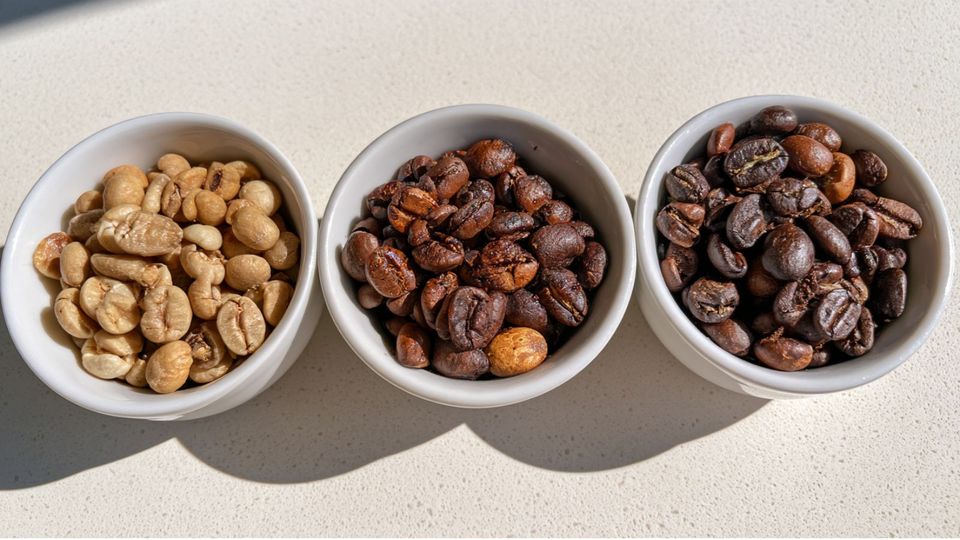
The audible popping sound during roasting when beans expand and release built-up moisture. It marks the start of light roast territory, with darker roasts developed further past this point.
Crema
The thin layer of golden-brown foam that sits on top of a freshly pulled espresso shot, made of oils and carbon dioxide released during extraction. A thick, lasting crema is a sign of fresh beans and a well-pulled shot.
Espresso & Milk Drink Terms
Espresso
A concentrated shot of coffee made by forcing hot water through finely-ground coffee under high pressure. Espresso is a brewing method, not a bean or roast level, despite how often the word gets used that way.
Ristretto
A restricted espresso shot pulled with less water than a standard shot for the same amount of ground coffee, resulting in a smaller, more concentrated, syrupy pour.
Americano
Espresso diluted with hot water, built to approximate the strength and volume of drip coffee while keeping the flavor profile of espresso.
Cortado
Equal parts espresso and steamed milk, served in a small glass with little to no foam, cutting the espresso’s intensity without drowning it the way a larger milk drink would.
Cappuccino
Espresso topped with roughly equal parts steamed milk and milk foam, traditionally served in a 5 to 6 ounce cup. The foam layer is what separates it from a latte.
Latte
Espresso with steamed milk and a thin layer of foam on top, served in a larger cup than a cappuccino, which makes it noticeably milkier and less intense per sip.
Microfoam
Finely steamed milk with small, uniform bubbles rather than large foam bubbles. Microfoam is what gives lattes and cappuccinos their silky texture and is required for pouring latte art.
A glossary term is really just a shortcut for a flavor outcome. Learn what the outcome tastes like and the word stops being intimidating.
Tasting & Ordering Terms
Extraction
The process of dissolving flavor compounds out of ground coffee using water. Under-extraction tastes sour and thin, over-extraction tastes bitter and harsh, and the grind size and brew time are what control it.
Body
How heavy or light a coffee feels in the mouth, ranging from watery and thin to thick and syrupy. Brewing method affects body as much as the beans themselves.
Acidity
The bright, tangy quality in a coffee’s flavor, similar to the way a green apple or citrus tastes bright. This is a flavor trait roasters and tasters refer to, not a reference to pH or how a coffee will sit in your stomach.
Tasting Notes
Descriptive flavor words like chocolate, berry, or citrus that roasters use on bags of beans to describe a coffee’s character. They are a starting point for what to expect, not a guarantee every drinker will taste the same thing.
Dial In
Adjusting grind size, dose, or brew time in small steps until a recipe consistently produces the shot or cup you are aiming for. Every new bag of beans usually needs at least a small dial-in adjustment.
Order With Confidence
Once the vocabulary clicks, the right gear makes it easier to put these terms into practice at home.

One thought on “The Ultimate Coffee & Barista Terms Glossary”