 Espresso Gears
 Brewing Essentials
 Coffee Accessories
 Brewing Guides
Use 20g of medium-fine ground coffee and 320g of water at 200 to 205°F. Wet the filter, add the grounds, pour 40g of water to bloom for 30 to 45 seconds, then pour the rest in slow circles. Aim to finish around the 3 minute mark.
Pour-over has a reputation for being fussy, but the method is simple once you break it down. You are doing the same thing as a drip machine, just with more control over the water, and that control is what gives the cup its clean, bright flavor.
What You Need
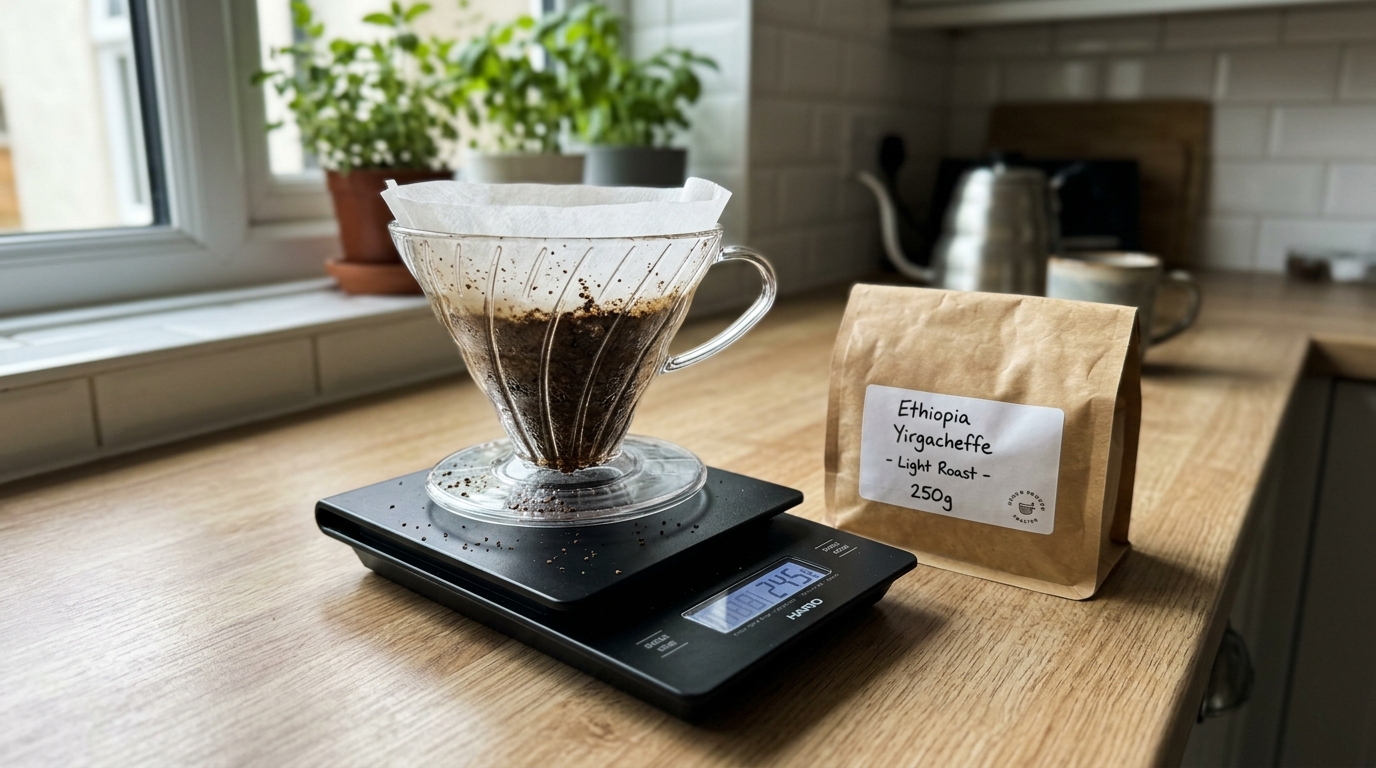
A pour-over dripper (a V60, Kalita Wave, or similar cone), paper filters, a kettle, a scale, a timer, and a burr grinder. A gooseneck kettle makes slow, steady pouring much easier, but a regular kettle works if you pour carefully. The scale matters most: measuring in grams is the difference between a cup you can repeat and one you cannot.
Step by Step
1. Heat the water
Bring the kettle to a boil, then let it sit for 30 to 60 seconds. That puts the water right around 200 to 205°F, which pulls out flavor without scorching the grounds.
2. Rinse the filter
Place the filter in the dripper and rinse it with hot water. This removes the papery taste and warms the dripper. Discard the rinse water.
3. Add the grounds
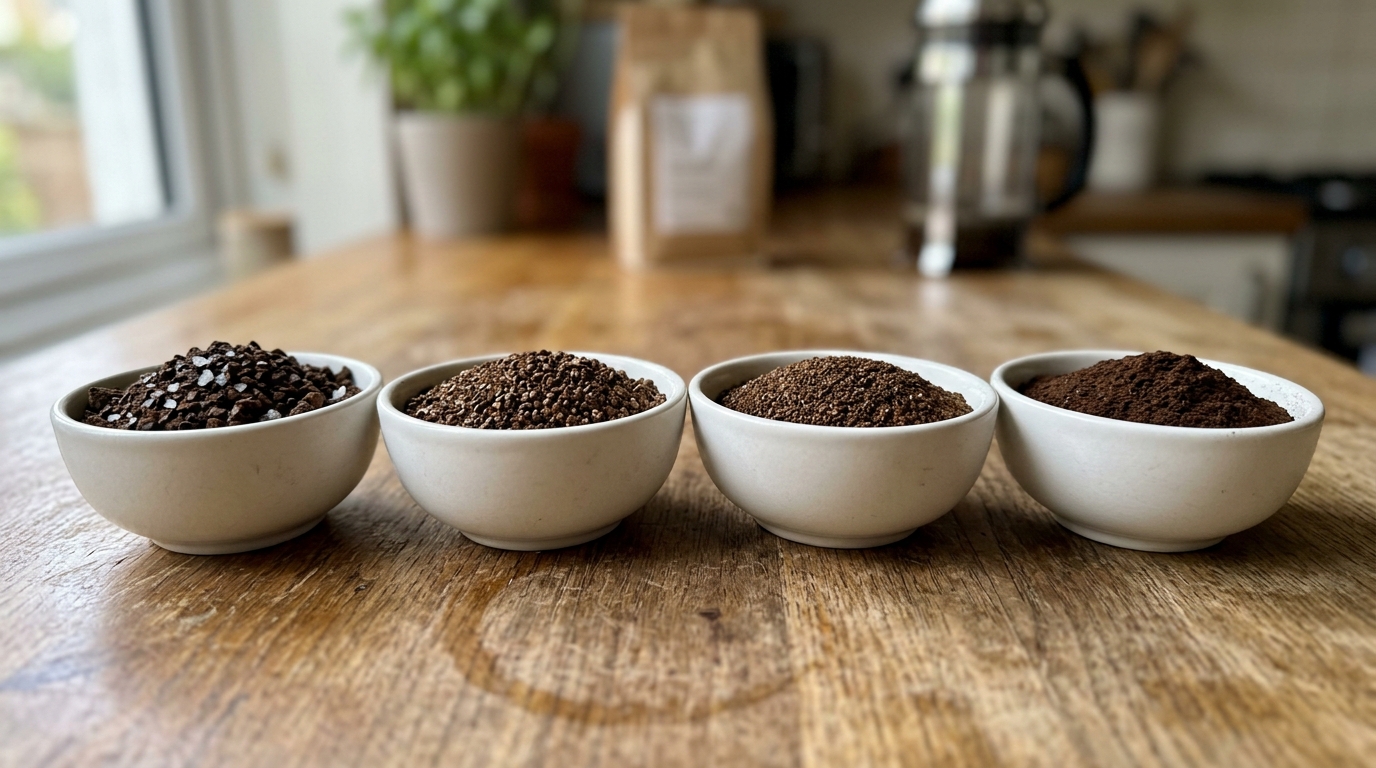
Grind 20g of coffee to a medium-fine texture, a bit finer than table salt, and add it to the filter. Give it a gentle shake so the bed is level, then zero your scale.
4. Bloom
Pour about 40g of water over the grounds, just enough to wet all of them, and wait 30 to 45 seconds. You will see them puff up as trapped gas escapes. Skipping this step is a common reason pour-overs taste flat.
5. Pour in slow circles
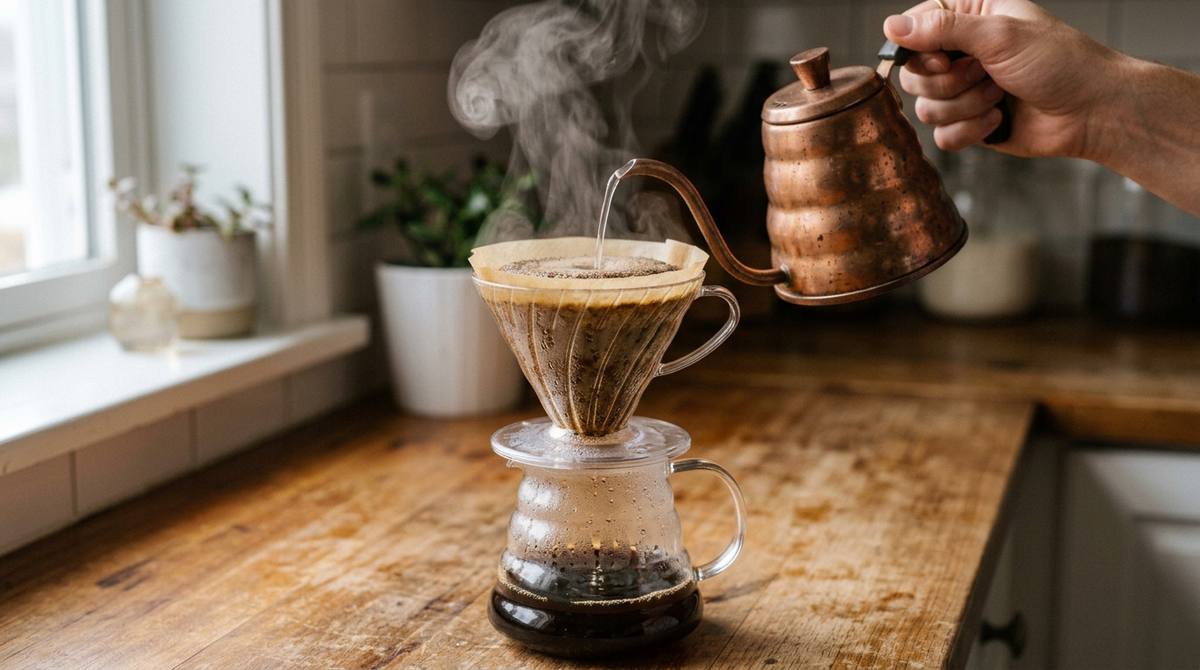
Pour the rest of the water in slow, steady circles, working outward from the center and avoiding the filter walls, until the scale reads 320g. Try to reach that by about the 2 minute mark.
6. Let it drain
Wait for the last of the water to drip through. The whole brew should finish around 3 minutes, give or take 30 seconds.
Most pour-over problems are grind problems. Adjust the grind before you change anything else.
Fixing a Pour-Over That Tastes Off
If the cup tastes sour or thin, your grind is probably too coarse and the water ran through too fast, so grind a little finer. If it tastes bitter or harsh, or the water is dripping through very slowly and clogging, grind a little coarser. Change one thing at a time and taste after each brew. Our grind size guide shows what each setting should look like, and the ratio guide helps if you want a stronger or lighter cup.
A Common Myth: You Need Perfect Spirals
Pour-over videos make the pour look like a precise art, but a gentle, even pour that keeps the grounds evenly wet matters far more than any particular pattern. Focus on your grind, ratio, and timing first. The pouring technique can come later.
Get the Right Tools
A scale, a good dripper, and a gooseneck kettle make pour-over repeatable and easy.