
 Espresso Gears
 Brewing Essentials
 Coffee Accessories
 Coffee Beans
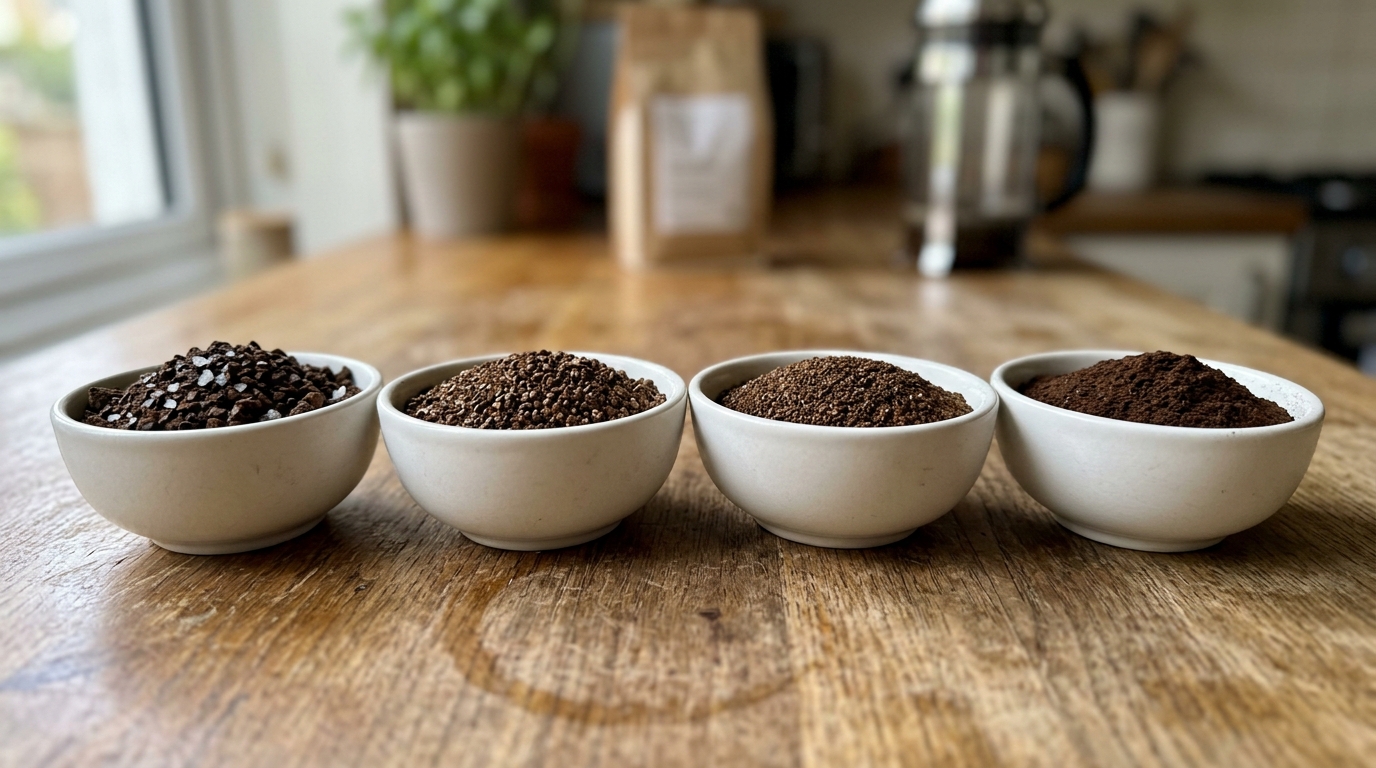
Grind size controls how fast water pulls flavor out of coffee. Use a coarse grind for long contact brews like French press and cold brew, and a fine grind for fast contact brews like espresso. Get the size wrong and you will end up with a weak, sour cup or a bitter, over-extracted one, no matter how good the beans are.
Coffee extraction is really just water pulling flavor compounds out of ground beans over time. Grind size controls how much surface area the water has to work with, which controls how fast that extraction happens. A finer grind exposes more surface area and extracts faster, so it needs less contact time with water. A coarser grind exposes less surface area and extracts slower, so it needs more time. Match the two and you get a balanced cup. Mismatch them and you get a cup that tastes sour and thin, or bitter and harsh, even with excellent beans.
Why Grind Size Matters More Than Bean Quality
A lot of people troubleshoot a bad cup by switching beans first. Often the real problem is sitting in the grinder. If you use the same pre-ground, medium grind coffee for your French press, your drip machine, and your espresso maker, at least two of those three brews are going to taste off. Espresso pushed through a medium grind in 25 seconds barely extracts anything and tastes sour and watery. French press left to steep for four minutes with the same medium grind over-extracts and turns muddy and bitter, with a gritty texture since the grounds are too fine to settle cleanly. Matching grind size to brew method fixes most of what people blame on bad beans.
Coarse Grind: French Press and Cold Brew
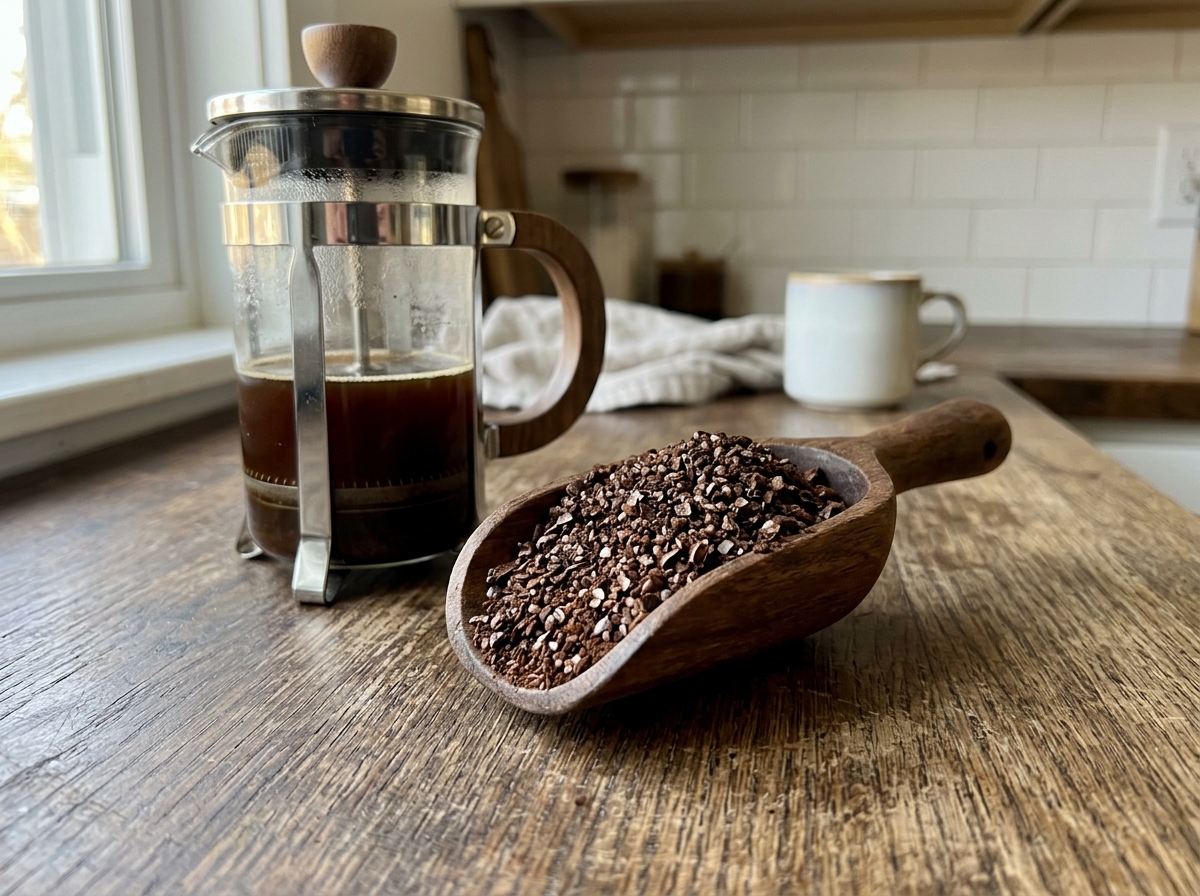
French press and cold brew both keep grounds in contact with water for a long time, four minutes for French press and 12 to 24 hours for cold brew, so they need a coarse grind to avoid over-extracting. The texture should look like coarse sea salt or breadcrumbs. Too fine here and the metal mesh filter cannot catch everything, which is where that gritty, sludgy mouthfeel at the bottom of the cup comes from.
Medium Grind: Drip and Pour-Over
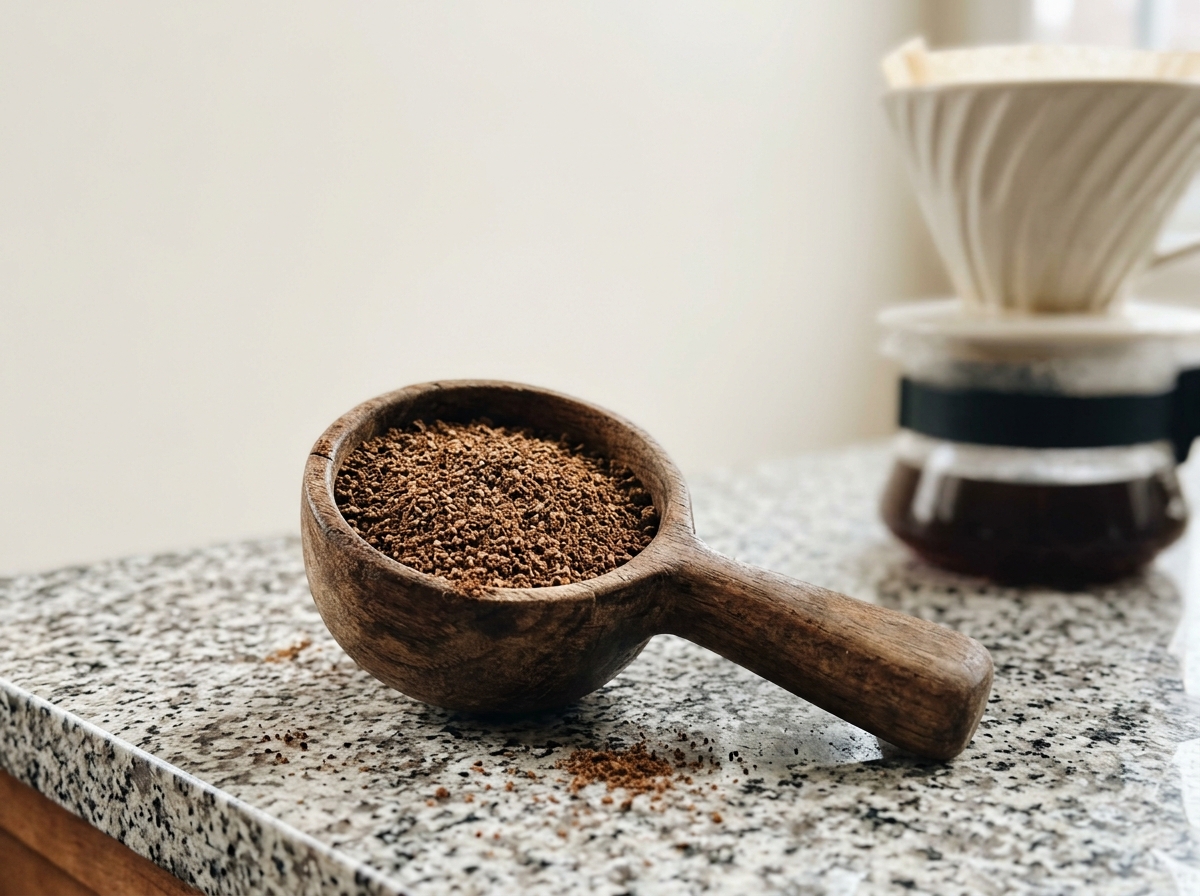
Drip machines and pour-over methods like a V60 or Chemex sit in the middle, with water in contact for roughly three to five minutes. A medium grind, about the texture of regular sand, is the starting point here. If your pour-over finishes draining too fast and tastes sour, go slightly finer. If it drains slowly and tastes bitter or the filter clogs, go slightly coarser.
Match the grind to how long the water and coffee will actually be in contact, not to how strong you want the cup to taste.
Fine Grind: Espresso
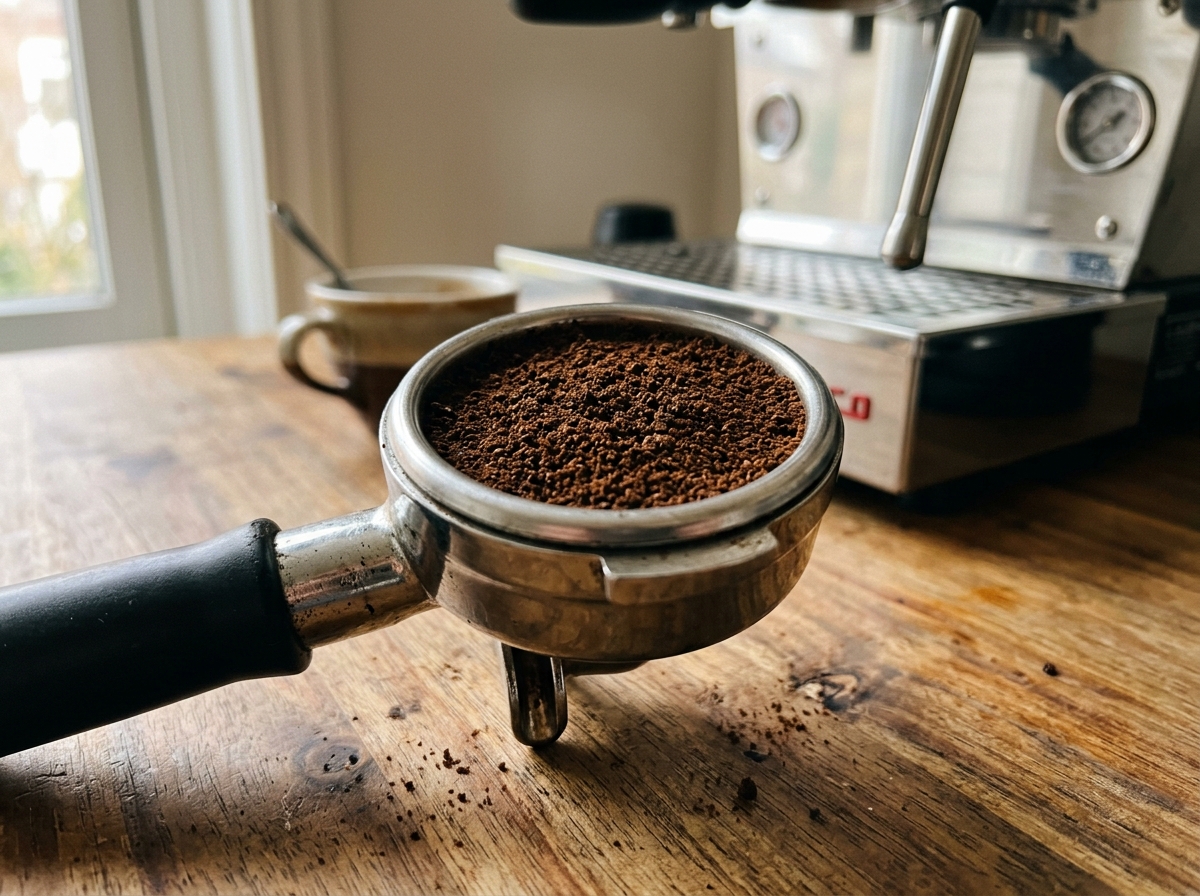
Espresso forces hot water through the grounds in about 25 to 30 seconds under real pressure, so it needs a fine grind, close to the texture of table salt, to build enough resistance for a proper shot. This is also the grind size most sensitive to small changes: a setting that is slightly too coarse can turn a 25 second shot into a fast, sour 15 second shot, and a setting too fine can choke the machine and pull a bitter, over-extracted shot in 45 seconds or more.
Extra-Fine Grind: Turkish Coffee
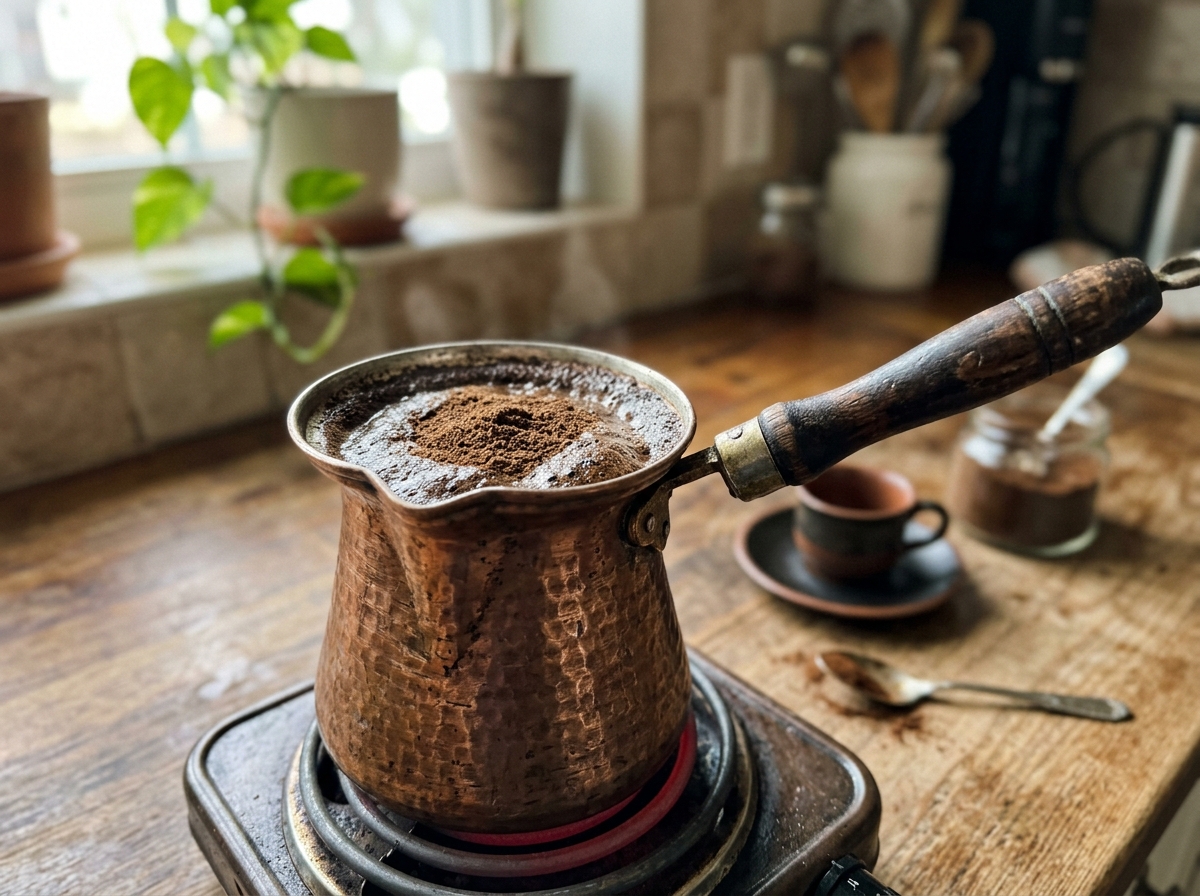
Turkish coffee uses the finest grind of any common brew method, closer to powdered sugar or flour than sand. The grounds are simmered directly in water, unfiltered, and the fine grind is what lets them settle into the thick sediment at the bottom of the cup instead of floating in every sip. A standard burr grinder often will not go fine enough for true Turkish coffee, which is why dedicated Turkish grinders exist.
A Quick Note on AeroPress
AeroPress does not fit neatly into one category because the brew time is adjustable. A shorter, one to two minute steep works well with a medium-fine grind, close to table salt, while a longer three to four minute steep can handle something closer to a medium grind. This flexibility is part of why the AeroPress has such a dedicated following: it tolerates grind size experimentation better than almost any other method.
One Mistake That Wastes Good Beans
Buying great beans and then grinding them all at once for the week is one of the most common ways to waste money on coffee. Ground coffee loses aroma and flavor within days because the extra surface area that helps extraction also speeds up staleness. Grinding right before you brew matters more than almost any other variable, including roast date. If you only make one change after reading this, let it be grinding fresh per cup instead of grinding a week’s worth at once.
Dial It In
A good burr grinder with real grind size control makes every method on this page easier to get right.

2 thoughts on “Coffee Grind Size Guide by Brew Method: From Coarse to Extra-Fine”