 Espresso Gears
 Brewing Essentials
 Coffee Accessories
 Brewing Guides
A single espresso shot has roughly 63mg of caffeine, and a double shot has roughly 125mg. That is more caffeine per ounce than drip coffee, but less total caffeine than a full mug, since a shot is only one to two ounces of liquid.
Espresso has a reputation as the strongest thing on the menu, and per ounce, it is. But “strongest” and “most caffeine in the cup” are not the same question, and mixing them up is how people end up surprised that their large drip coffee actually out-caffeinates their double shot.
Caffeine Concentration vs. Total Caffeine
Espresso is brewed with a small amount of water forced through a lot of finely-ground coffee, which is why it packs roughly 40mg of caffeine into every ounce. Drip coffee uses far more water per dose of grounds, which dilutes that same caffeine across a much bigger cup, usually landing around 12 to 16mg per ounce. Ounce for ounce, espresso wins by a wide margin. Cup for cup, an 8 to 12 ounce mug of drip coffee can easily contain more total caffeine than a single or even a double shot, simply because there is so much more liquid in it.
Single Shot vs. Double Shot
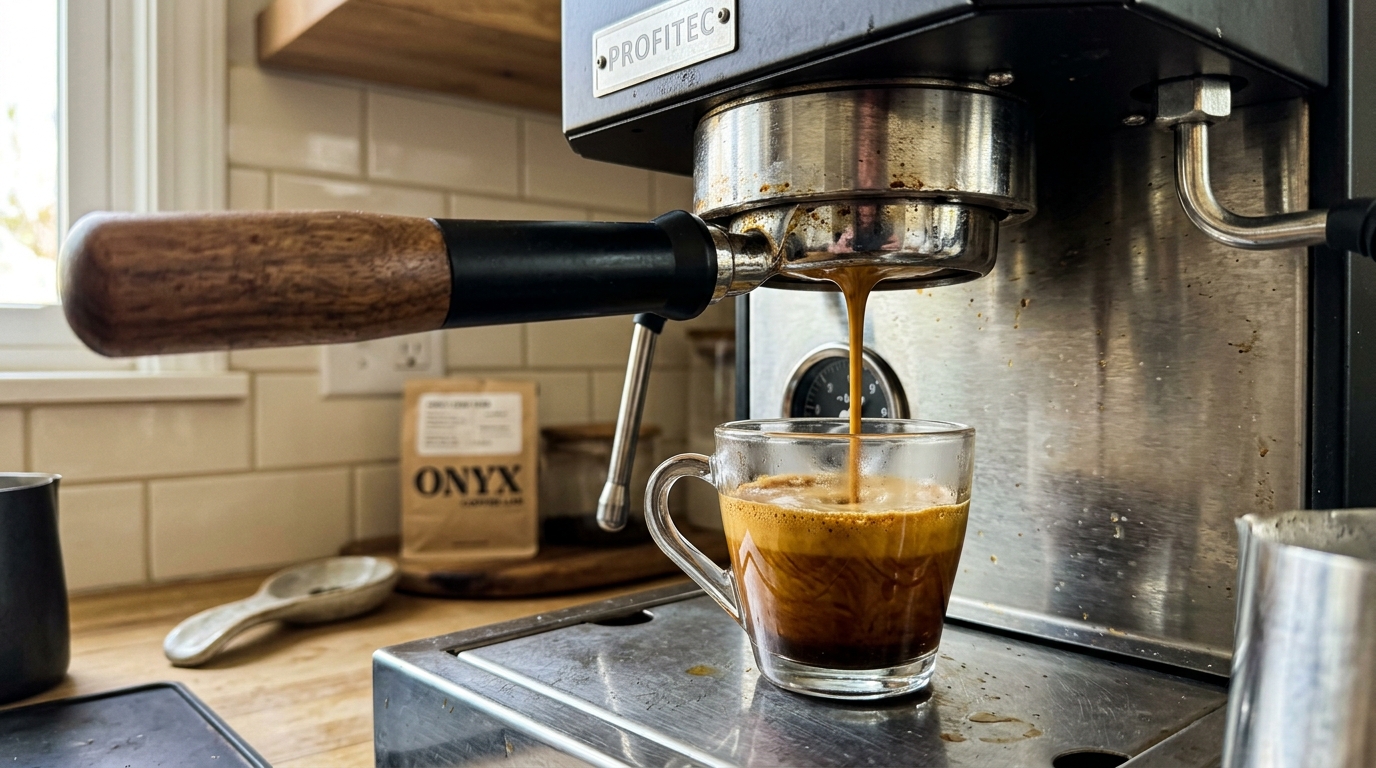
A single shot is about one ounce of brewed espresso and contains roughly 63mg of caffeine. A double shot, which most cafes actually pull by default today, uses roughly twice the ground coffee and water, landing around 125mg. If you order “a shot” of espresso at most coffee shops without specifying, you are very likely getting a double. Drinks built on multiple shots, like a triple-shot latte, stack that number further, roughly 190mg for three shots.
Caffeine comes from how much ground coffee goes into the shot, not from how dark it was roasted or how intense it tastes.
What Actually Changes the Number
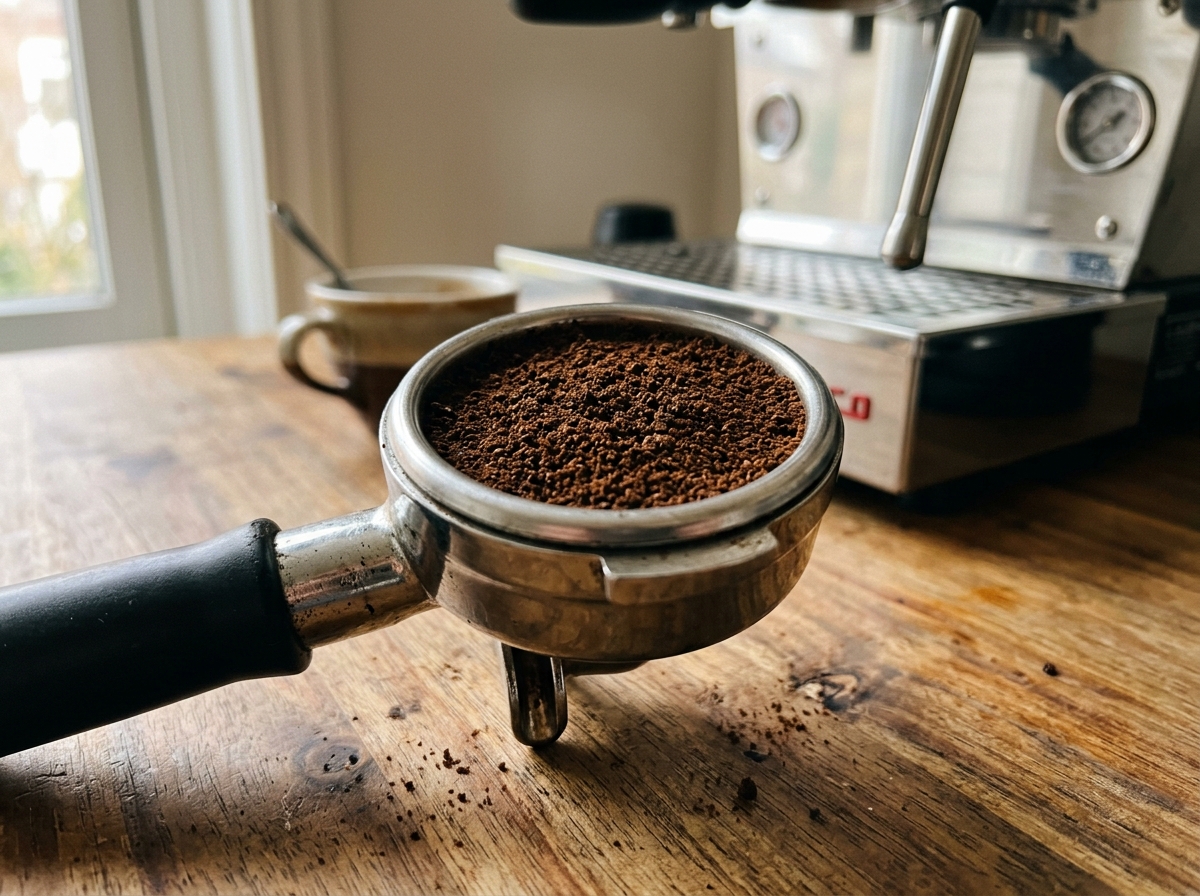
A few real variables move espresso’s caffeine content. Dose matters most: more ground coffee packed into the portafilter means more caffeine extracted, which is the entire difference between a single and a double. Bean variety matters too, robusta beans carry roughly twice the caffeine of arabica, though most specialty cafes pull shots from arabica almost exclusively. Grind size and shot time have a smaller effect, a shot pulled longer pulls slightly more caffeine along with more flavor compounds.
Roast level is the one variable that does not do what most people assume. Dark roast is not higher in caffeine than light roast, and it may even be marginally lower by weight, since longer roasting burns off a small amount of mass. The bitter, bold taste of a dark roast espresso comes from roast chemistry, not from a bigger caffeine hit.
How Espresso Compares to Other Drinks
A standard latte or cappuccino carries the same caffeine as whatever shot it is built on, usually a double, since the milk adds volume and flavor but no caffeine of its own. That is why a 16oz latte and a 2oz double espresso have the same caffeine content despite the huge size difference.
Pull a Better Shot at Home
Knowing the numbers helps, but a reliable espresso machine and a grinder that can dial in consistently is what actually controls your shot.