 Espresso Gears
 Brewing Essentials
 Coffee Accessories
 Coffee Beans
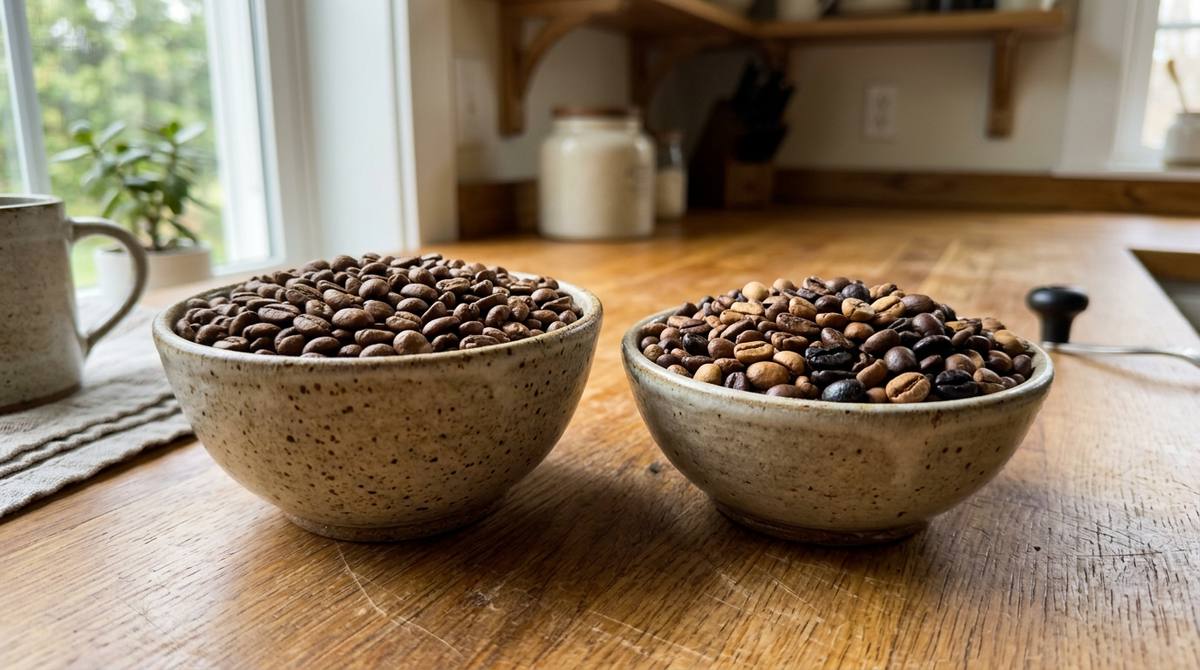
Single-origin coffee comes from one place and shows off that place’s distinct flavor. A blend mixes beans from several places for balance and consistency. Neither is better. Pick based on how you drink your coffee, not on which label sounds fancier.
Walk down any coffee aisle and you will see two kinds of bags: ones that name a single country or farm, and ones with a name like “House Blend” or “Morning Roast.” The pricing and the marketing make it feel like one is the premium choice, but that is not really how it works. They are tools for different jobs.
What Single Origin Actually Means
Single-origin coffee comes from one identifiable place. That place can be as broad as a whole country, like Ethiopia or Colombia, or as specific as one region, one farm, or even one harvest lot from that farm. The point is that all the beans in the bag share the same growing conditions, so the coffee tastes like where it came from: bright and floral from some regions, nutty and chocolatey from others.
What a Blend Is For
A blend combines beans from two or more origins, and roasters do it on purpose. Harvests change from year to year, so a blend lets a roaster keep the same flavor on the shelf all twelve months. Blending also lets them balance strengths: one origin might bring sweetness and body while another adds brightness. Most espresso on a cafe menu is a blend for exactly this reason, since a shot has to taste the same on Monday as it does on Friday.
A single origin shows you a place. A blend shows you a recipe. Both can be excellent.
The Myth: Single Origin Always Means Higher Quality
It is easy to assume single-origin is the better product and blends are a way to hide cheaper beans. In practice, quality depends on the beans, the roast, and how fresh the coffee is, not on the label. A well-made blend of great beans beats a stale or poorly roasted single origin every time. Single-origin is simply more transparent about where it came from, which is not the same thing as being better.
Which One Should You Pick?
If you mostly brew pour-over, drip, or French press and drink your coffee black, single-origin is a great way to taste the differences between regions, especially in lighter roasts where those flavors come through clearly. If you pull espresso or make lattes and cappuccinos, a blend is usually the safer bet because it is built to taste balanced with milk. Plenty of cafes serve single-origin espresso too, so treat this as a starting point rather than a rule.
Whichever you choose, how you roast and grind matters just as much. Our guide to roast levels explains how roast changes what you taste, and the coffee terms glossary decodes the rest of the words on the bag.
Taste the Difference Fresh
Grinding right before you brew is the easiest way to taste what makes each origin or blend special.